

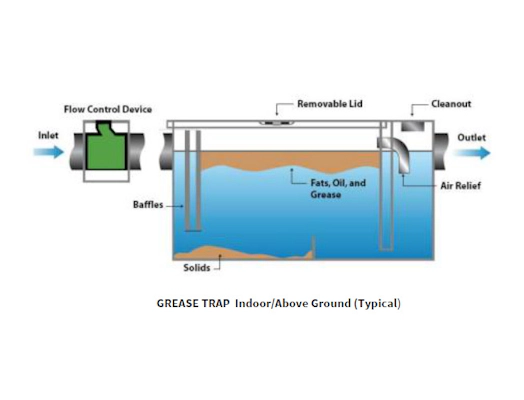
All commericial/business facilities are required to have a properly installed grease trap(s) or interceptor to retrieve the grease-laden drainage from fixtures and equipment in the food preparation areas. A grease trap is commonly installed under three compartment sinks, and/or at the prewash station, holds a volume of fewer than 50 gallons, and typically measures less than three feet in any dimension. Residences are not required to have grease traps or interceptors.

Grease Control Best Management Practices (BMPs) will reduce the amount of fats, oils, and grease (FOG), which enter the sanitary sewer system from any commercial food service facility. High oil and grease concentrations can be lowered by minimizing the amount of FOG and food being discharged down all drains (including those attached to two-or-three-compartment sinks and automatic dishwashers). The most cost-effective way to reduce grease in the sewer is through improved kitchen management practices.